


Written by Stuart Simmonds – VP Business Development & Marketing
October 22, 2026
What you’ll learn from this article:
- What industrial power protection actually means and why it goes beyond backup power.
- The operational risks unstable or interrupted power creates in a process plant
- The difference between general backup power and critical industrial power protection
- Where UPS systems, chargers, inverters, power conditioners, and remote bypass switches fit
- Why lifecycle, reliability, and serviceability decide the real cost of power protection
Introduction.
In a process plant, the power supply is easy to take for granted until it moves. A momentary sag, a switching transient, or a brief interruption rarely makes the news, but it can trip an analyzer, reset a controller, or drop a safety system at exactly the wrong moment. In critical process and analyzer applications, the question is not only “what happens in a full outage?” but “what happens every time the power is less than perfect?”
That is the job of industrial power protection: keeping essential systems available and stable through the disturbances that happen far more often than complete blackouts. It protects continuity, reduces risk, and helps ensure that the equipment a plant relies on for safety, control, and measurement keeps doing its job.
This article explains what industrial power protection covers, why it matters in heavy industry, and how the main building blocks fit together. AMETEK Solidstate Controls is used as a reference because its portfolio maps cleanly to the components involved and because Novatech now supports it across Canada.
Power protection is more than backup power.
Power protection is often associated with backup power during an outage. In a critical process environment, that definition is too narrow. The goal is to maintain the continuity of critical systems, not just provide emergency power.
While backup power addresses a complete outage, industrial power protection also addresses common electrical disturbances, including voltage sags and swells, transients, frequency variation, and short interruptions that can still disrupt sensitive electronics. This involves conditioning the power, maintaining continuity through brief interruptions, and keeping critical loads available to maintain process stability and the reliability of the data used to control it.
The operational risks of unstable or interrupted power.
When power quality is compromised, the impact can extend beyond the equipment directly affected:
- Loss of measurement availability. Analyzers and their sampling systems may go offline, leaving operators without the data needed to monitor and control the process.
- Unplanned shutdowns and restarts. Controllers, drives, and safety systems may reset, requiring restarts that can disrupt operations and, in some processes, create safety risks.
- Cascading downtime. An interruption in one subsystem can affect others downstream, turning a momentary disturbance into hours of recovery.
- Premature equipment wear. Repeated transients and poor power quality can shorten the service life of sensitive electronics, with the associated costs often becoming apparent over time.
General backup power vs. critical industrial power protection.
Not all power systems are designed for the same applications. General-purpose backup systems are typically designed for less demanding applications in controlled environments. Critical industrial power protection systems are designed to operate in harsh conditions, support critical loads, provide longer service life, and allow for maintenance in the field.
| General backup power | Critical industrial power protection | |
|---|---|---|
| Designed for | Offices, IT rooms, light duty | Heavy industry, process & analyzer loads |
| Operating conditions | Clean, climate-controlled | Harsh, wide temperature, remote sites |
| Primary goal | Ride through a full outage | Continuity + power quality + risk reduction |
| Lifecycle expectation | Shorter | Long service life, supportable for years |
| Serviceability | Replace the unit | Field-serviceable; parts + expertise on hand |
Where industrial power protection fits.
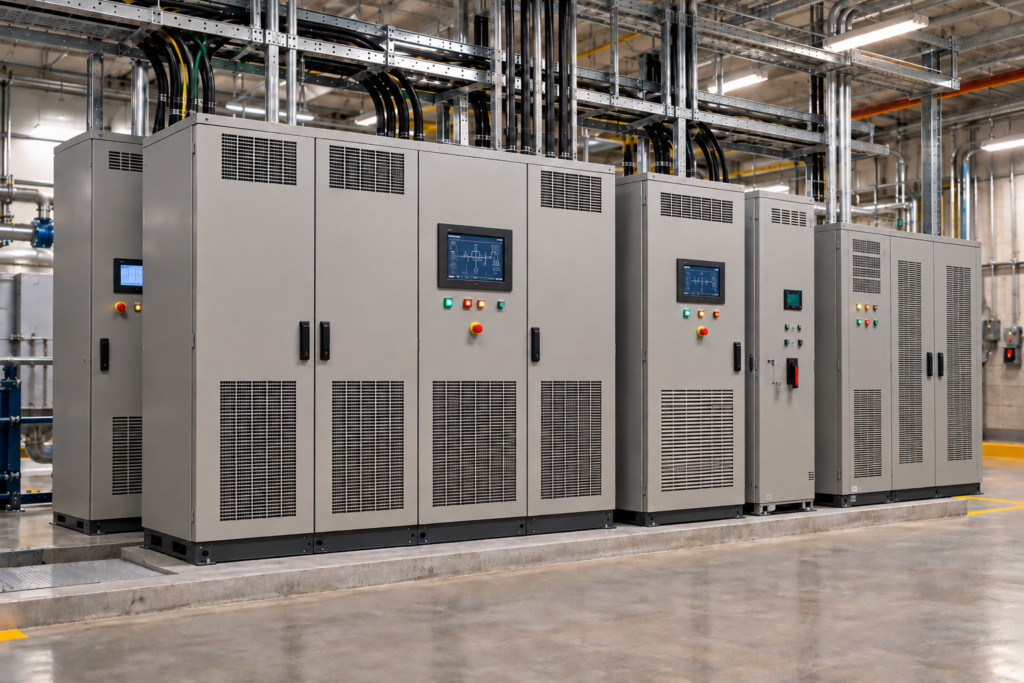
A complete approach usually combines several components, each serving a specific purpose:
- Industrial UPS systems: Keep critical loads powered through voltage sags and interruptions without a break in supply.
- Battery chargers and rectifiers: Maintain the DC systems and battery banks that support essential equipment.
- Inverters: Convert stored DC power to stable AC power for critical AC loads.
- Power conditioners: Condition incoming power by reducing transients and variations that can disrupt sensitive electronics.
- Remote bypass switches: Allow maintenance or transfer without interrupting power to the protected load.
Together, these components help maintain the operation of analyzers, control systems, and associated equipment during power disturbances, preserving measurement availability and process stability.
Why lifecycle, reliability, and serviceability matter most.
In industrial power protection, the purchase price is only one part of the overall cost. These systems are expected to operate for many years in demanding conditions, so the questions that matter are about the long term: How reliable is the system under actual operating conditions? How is it serviced, and by whom? Are parts and expertise available locally when maintenance or repairs are required? A power protection system is only as good as the support behind it over its service life.
How Novatech helps.
Many suppliers can provide power protection equipment. What matters is the support that comes with it: understanding the criticality of the loads, matching the protection to actual operating conditions, and providing ongoing support.
As the Canadian partner for AMETEK Solidstate Controls, Novatech helps industrial facilities address the power protection requirements of their critical measurement and control systems. This starts with understanding the application, its operating conditions, and the risks associated with power disturbances. Working with customers to evaluate these requirements helps ensure that the selected solution is appropriate for their needs.
Reliable measurement begins with reliable power, and choosing the right protection is an important part of maintaining that reliability.
If power quality or continuity poses a risk to your critical systems, talk to a Novatech specialist. Addressing these risks before an interruption occurs can help prevent unplanned downtime.
Frequently asked questions.
What is industrial power protection? It is the combination of equipment, including industrial UPS systems, battery chargers, inverters, power conditioners, and bypass switches, that keeps critical process and analyzer systems running through power disturbances, not just full outages. The goal is to maintain power continuity and quality while reducing operational risks.
Is industrial power protection just a UPS? No. A UPS is one component. A complete protection system usually combines a UPS with battery chargers and rectifiers, inverters, power conditioners, and remote bypass switches, matched to the criticality of the loads and the operating environment.
Why does power quality matter for analyzers? Analyzers and their sampling systems contain sensitive electronic components. Voltage sags, transients, and short interruptions can take them offline or affect measurement accuracy, leaving operators without reliable data to safely control the process.
Who supports AMETEK Solidstate Controls power systems in Canada? Novatech is the Canadian partner for AMETEK Solidstate Controls, providing support to customers across Canada.
Takeaway.
In a critical process plant, power protection is not a box that waits for a blackout. It is how you keep your analyzers, controls, and safety systems available through everyday disturbances that are far more common than full outages. Treating it as part of operational continuity and risk management, rather than simply backup power, influences both the equipment you choose and the way you support it.
The right protection matches the criticality of the loads and the realities of the site, with access to the necessary parts and technical expertise over the long term. That combination of the right system and ongoing support is what helps maintain reliable power and reliable measurement over time.
Be the first to read our articles
Written by Stuart Simmonds – VP Business Development & Marketing
Write to Stuart at: stuart.simmonds@novatech.ca
