

Written by Stuart Simmonds – VP Business Development & Marketing
July 7, 2026
What you’ll learn from this article:
- How extractive, direct on-pipe, and hybrid tail gas analyzer designs differ
- Where the AMETEK Western Research 888L fits between the 900ADA and 888 architectures
- Why sample handling and environmental conditions matter in sulphur recovery applications
- How diagnostics and HMI access support maintenance and troubleshooting
- What to review before selecting or replacing a tail gas analyzer
Why Analyzer Architecture Matters.
Tail gas analysis plays an important role in sulphur recovery unit operation. The analyzer provides H₂S and SO₂ measurements used to help operators understand and control the reaction chemistry in the process.
When H₂S and SO₂ measurements are stable and representative, they support better operating decisions. When those readings become delayed, unstable, or difficult to maintain, the issue is not always the analyzer itself.
In many cases, the problem is connected to how the sample is taken, conditioned, transported, heated, or accessed for maintenance.
A tail gas analyzer is part of a complete measurement system. That system includes the process tap, probe, sample path, temperature control, analyzer location, diagnostics, and maintenance access. If one part of that system is poorly matched to the application, the measurement can suffer.
That is why the choice between extractive, direct on-pipe, and hybrid analyzer architecture is not only a design preference. It is a reliability decision.
Three Tail Gas Analyzer Architectures.
|
Architecture |
How it works |
Main advantage |
Main trade-off |
|
Extractive analyzer |
Sample is removed from the process and transported to an analyzer in a remote building or shelter |
Analyzer is protected and easier to access |
Sample handling system becomes critical |
|
Direct on-pipe analyzer |
Analyzer is installed directly at the process pipe |
Measurement is closer to the process with less sample transport |
Analyzer must operate in the process-area environment |
|
888L hybrid design |
Direct on-pipe sampling is combined with a remote analyzer interface |
Balances close process sampling with remote access to interface and diagnostics |
Still requires review of sample line routing, temperature, and maintenance access |
This comparison is not about choosing one “best” design for every application. It is about understanding what each design asks from the installation.
Extractive Tail Gas Analysis.
The extractive analyzer design removes the sample from the process and transports it to an analyzer installed away from the pipe, often in an analyzer building or shelter.
This approach can be practical where the analyzer needs protection from the process-area environment, or where maintenance teams need easier access to the analyzer, utilities, calibration equipment, and user interface. This is the type of installation many users associate with the 900ADA.
The trade-off is that the sample handling system becomes a critical part of the measurement.
Once the sample leaves the process, it must remain representative until it reaches the analyzer. Long heated runs, cold spots at fittings or supports, plugged filters, unstable flow, and difficult probe access can all affect whether the sample still represents the process by the time it reaches the analyzer.
In other words, the extractive approach gives the analyzer a protected location, but places more importance on the sample system. That is not a weakness when the system is properly designed and maintained. It is simply the engineering reality of the architecture.
Direct On-Pipe Tail Gas Analysis.
The direct on-pipe design takes a different approach.
Instead of transporting the sample to a remote analyzer, the analyzer is installed directly at the process pipe. This reduces the need for a traditional extractive sample handling system and places the measurement closer to the process.
A shorter sample path can reduce the number of places where the sample may cool, plug, condense, or change before it is measured. It can also reduce the number of sample handling components that require routine inspection and maintenance.
The trade-off is the installation environment.
The analyzer now has to live where the pipe lives, with the same weather exposure, access limitations, vibration, and maintenance constraints as the rest of the process-area equipment. The plant must consider whether the sample point is practical for routine checks, calibration work, and analyzer interaction.
A direct on-pipe analyzer can be an excellent fit where the sample point is accessible and the environment is suitable. It may be less practical where the process location is exposed, difficult to reach, or not ideal for regular access to the analyzer interface.
Where the AMETEK 888L Fits.
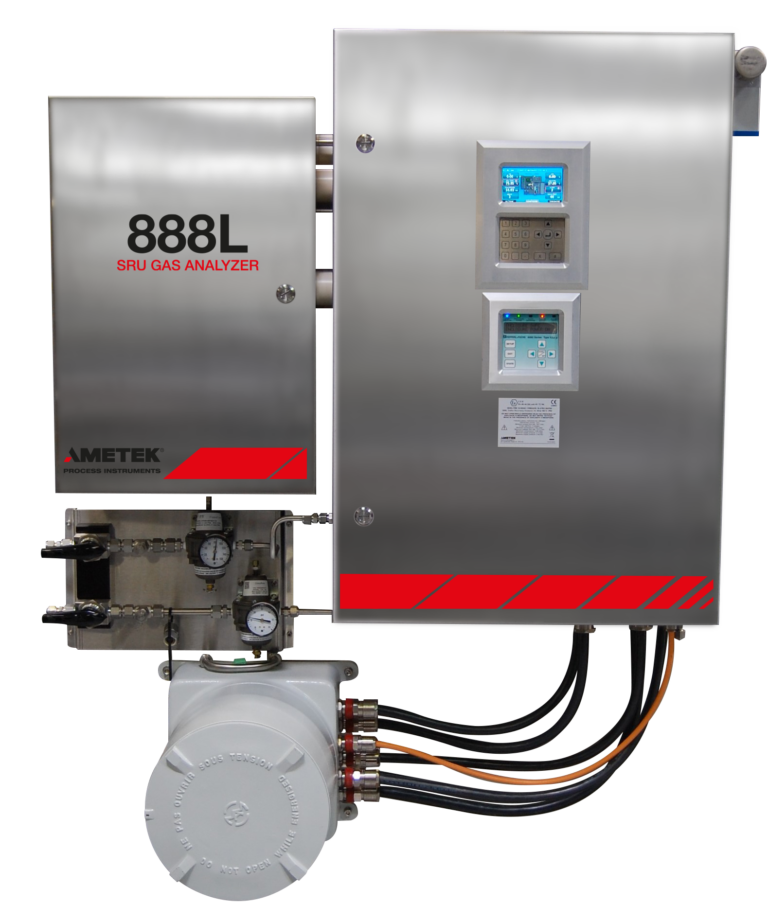
The AMETEK Western Research 888L was developed for applications that do not fit neatly into either traditional category.
It combines direct on-pipe sampling with a remote analyzer interface arrangement. The sample can be taken at the pipe, close to the process, while the analyzer interface and related components can be located remotely, such as in a building or shelter.
That combination is what makes the 888L architecture useful. It bridges the gap between the extractive 900ADA-style installation and the direct on-pipe 888 design.
For end users, this means there is no need to force every application into one of two traditional categories. A site may want the measurement advantages of sampling close to the process but still need the analyzer interface in a more protected or accessible location.
This is especially relevant for customers who are familiar with the 900ADA and are reviewing lifecycle options. The conversation should not only be, “What replaces the existing analyzer?” It should also be, “What architecture makes the most sense for the next stage of this installation?”
Environment, Diagnostics, and Maintenance Access.
Environmental temperature is a major factor in process analyzer installations.
In an extractive system, the analyzer may be protected in a shelter, but the sample still has to travel from the process to the analyzer. This makes heated sample lines, insulation, routing, and temperature control critical.
In a direct on-pipe system, the sample path is reduced, but the analyzer is more exposed to the environment around the process pipe.
The 888L provides a hybrid option by allowing the sample to be taken at the pipe while keeping the analyzer interface in a more suitable location. This can be valuable when environmental constraints make a fully direct-mounted arrangement less attractive, but a traditional extractive system introduces more sample handling complexity.
Diagnostics also matter.
When a reading becomes unstable, maintenance teams need to understand whether the issue is related to the analyzer, sample path, process, flow, temperature, or another condition. Clear diagnostic information helps narrow the problem before technicians start removing parts or chasing the wrong cause.
For a broader look at how disciplined service practices support analyzer reliability over time, read our article on service discipline and the long life of process analyzers.
The 888L architecture supports this by allowing the analyzer interface to be located remotely from the process sample point. For many plants, that means operators and technicians can access analyzer information in a more practical location, rather than relying only on interaction at the pipe.
Regular inspection is still required. The sample tap, probe, heated lines, and analyzer still need proper maintenance. But the hybrid architecture can help reduce some of the trade-offs that have traditionally existed between extractive and direct-mounted analyzer designs.
Planning your next tail gas analyzer upgrade?
Explore how the 888L hybrid architecture supports tail gas measurement in SRU applications.
What to Review Before Choosing.
Before choosing between extractive, direct on-pipe, and hybrid tail gas analysis, review the full measurement loop:
- Is the process sample point representative and accessible?
- Can the sample remain stable between the process and the measurement point?
- Are heated lines, insulation, and routing suitable for the application?
- Are there cold spots, long runs, or access points that regularly create maintenance issues?
- Is the analyzer location practical for safe access, calibration, and inspection?
- Are diagnostics available where operators and technicians can use them effectively?
- Is the current analyzer being replaced because of analyzer age, sample system complexity, environmental constraints, or lifecycle planning?
These questions help make the analyzer decision more connected to the way the unit actually operates.
Final Takeaway.
Sulphur recovery tail gas analysis is not a one-size-fits-all application.
Extractive analyzer systems, direct on-pipe analyzers, and hybrid analyzer designs each solve different problems. The best choice depends on the plant environment, sample conditions, installation constraints, and maintenance strategy.
The AMETEK Western Research 888L gives end users a third option. It bridges the gap between the traditional 900ADA-style extractive approach and the direct on-pipe 888 design, combining direct process sampling with the flexibility of a remote analyzer interface.
For plants reviewing tail gas analyzer options, especially those familiar with the 900ADA, the 888L is worth evaluating not simply as a newer analyzer, but as a different architecture that may better fit complex and plant-specific sulphur recovery requirements.
The goal is to choose the analyzer architecture that gives the plant reliable measurement, practical maintenance access, and the best fit for the way the unit actually operates.
Be the first to read our articles
Written by Stuart Simmonds – VP Business Development & Marketing
Write to Stuart at: stuart.simmonds@novatech.ca
