

When people think about industrial service, the first things that usually come to mind are technical. Preventive maintenance. Troubleshooting. Calibrations. Repairs. Emergency support.
All of that matters. It’s essential for keeping analytical systems running safely and reliably.
But when customers look back on moments where service truly mattered, they rarely remember only the technical details.
What they remember most is how the experience felt when support was needed.
Did communication feel clear and steady, or fragmented and rushed?
Did the issue feel owned, or did responsibility seem to move from one person to another?
Did different teams appear aligned, or disconnected?
Did the response reduce pressure or add stress at a time when operations were already under strain?
In industrial environments, strong technical expertise is expected.
The experience surrounding that expertise is often what defines the relationship over time.
That’s why service plays a much larger role in customer experience than many organizations realize.
What You’ll Take Away from This Article:
- Why customer experience doesn’t end when a project is delivered
- Why technical expertise alone rarely defines great service
- How communication, ownership, and internal alignment shape customer perception
- Why service moments often leave the strongest, most lasting impressions
- What real service stories reveal about partnership when conditions are difficult
Customer Experience Continues Long After Project Delivery.
Customer experience is often associated with the most visible stages of a relationship. Early conversations. The quoting process. Project execution. Delivery and startup.
These stages matter. They shape first impressions.
But for most industrial customers, the relationship doesn’t end when a system is commissioned.
Over time, equipment requires maintenance. Components age. Performance drifts. Unexpected issues arise. At that point, support becomes part of the relationship in a very practical way.
This is where the relationship becomes much more practical. Customers are no longer thinking about what was promised during the project. They are focused on what happens when help is needed.
How easy is it to reach the right person?
Is communication proactive or reactive?
Is ownership clear?
Does the customer feel supported, or left following up while operations wait for answers?
These questions may not come up during a project handover meeting, but they often shape how customers judge the relationship long after delivery.
Technical Expertise Alone Does Not Define Great Service.
Strong technical capability is fundamental. Customers expect service teams to understand the equipment, diagnose root causes, and resolve issues effectively. As we explored in our article on service discipline and analyzer reliability, consistent service practices play a direct role in long-term system performance.
That’s the baseline.
What distinguishes a strong service experience is often everything surrounding the technical work.
When a plant issue arises, the technical problem is rarely the only source of pressure. Internal teams need updates. Production decisions may be delayed. Timelines matter. Even manageable issues can quickly become stressful when uncertainty enters the picture.
This is where communication, clarity, and ownership become just as important as technical expertise.
Customers may not remember every troubleshooting step, but they will remember whether the experience felt organized, responsive, and under control.
Great Customer Experience Depends on Team Alignment.
From the customer’s perspective, service often appears as a direct interaction with a technician or service coordinator. Behind the scenes, however, the experience is shaped by much broader internal coordination.
Sales teams often understand the customer’s operating environment, priorities, and history. Project teams know installation details and design decisions. Service teams bring the field expertise required to diagnose and resolve issues.
When these groups work together effectively, customers experience a coordinated, confident response.
When they don’t, even technically capable organizations can create confusion.
Mixed messages, delayed updates, or unclear accountability can quickly undermine confidence, especially when time is critical.
Strong customer experience is not the result of one department performing well in isolation. It is the outcome of teams working together in a way that feels seamless from the customer’s point of view.
Service Moments Often Shape Long-Term Relationships.
Some of the most meaningful customer experiences emerge during situations no one planned for.
During the COVID period, even routine service visits became complex. Travel restrictions, provincial health protocols, and site access requirements changed constantly across the country. At the same time, customer systems still required ongoing support.
In one situation, Michael Thomson continued fulfilling maintenance commitments by adapting how he travelled, using his camper to move between customer sites while working within the safety requirements in place at the time.
From a technical perspective, the work still needed to be completed. From the customer’s perspective, something else mattered just as much. Support remained dependable, even under difficult and uncertain conditions.
Partnership Becomes Visible When Expectations Are Tested.
Not every service situation allows time for planning. Sometimes the issue is urgent, and operations are waiting for answers.
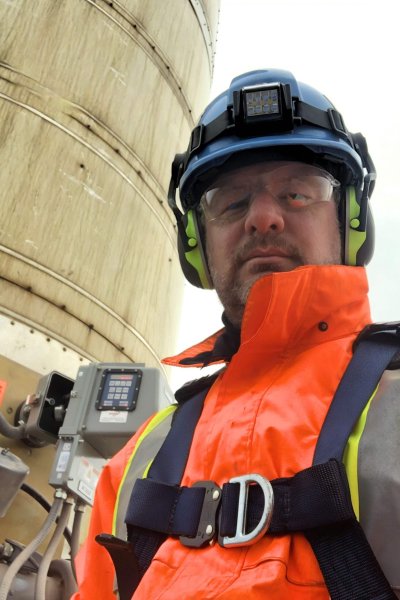
In one case, an emergency call came in at 5 PM in Calgary from a customer in Nova Scotia facing a critical plant issue. Travel arrangements were made immediately, and Chris Smith took a red-eye flight across the country so he could be on site supporting operations by 9 AM the next morning.
In moments like this, customers are not just looking for technical support. They are looking for people they can rely on.
Strong service depends on people, expertise, and responsiveness. Learn more about Novatech’s technical service team.
Final Thoughts.
Industrial service is often measured in technical terms. Problems resolved. Maintenance completed. Systems restored.
Customers remember something broader.
They remember whether communication stayed clear when the situation became stressful, whether teams seemed aligned, and whether someone stepped in, took ownership, and helped reduce pressure rather than adding to it.
Technical expertise is essential.
But when customers look back on the moments that truly defined their experience, it’s often the quality of the support around the technical work that stays with them.
Be the first to read our articles
Written by Félix Lalande-Hendershot
Customer Experience Manager
Write to Félix at: lalandehf@novatech.ca
